Gas Well Perforation Charges may not be the most exciting topic, but they actually play a pretty vital role in getting oil and gas out of the ground. Basically, these are specially designed explosives that create holes in the well’s casing, helping the hydrocarbons get from the reservoir into the wellbore so we can collect them. If you’re into oil and gas production, understanding how these charges work can really make a difference in optimizing how much we get out of the ground.
Now, the effectiveness of these perforation charges isn’t always straightforward—lots of things can influence their performance. Things like the size of the charge, how deep it’s set, and the characteristics of the surrounding rock all matter. Big companies like Schlumberger and Halliburton pour heaps of resources into research to make these tools better. Still, it’s not all smooth sailing—there are challenges, especially when it comes to safety and environmental concerns. Those need to be taken seriously.
Sometimes, the techniques we use don’t produce the results we’re hoping for. Unexpected issues can pop up, leading to higher costs and delays. That’s why it’s so important for operators to carefully assess their methods and learn from past projects. By analyzing what went right or wrong before, they can keep improving—which is crucial in this fast-changing industry. Honestly, staying on top of continuous improvements is the only way to stay ahead in this game.
The Basics of Gas Well Perforation: An Overview
Gas well perforation is a crucial step in oil and gas extraction. It creates openings in the well casing, allowing hydrocarbons to flow into the wellbore. Understanding the basics of this process is essential for efficient operation and production.
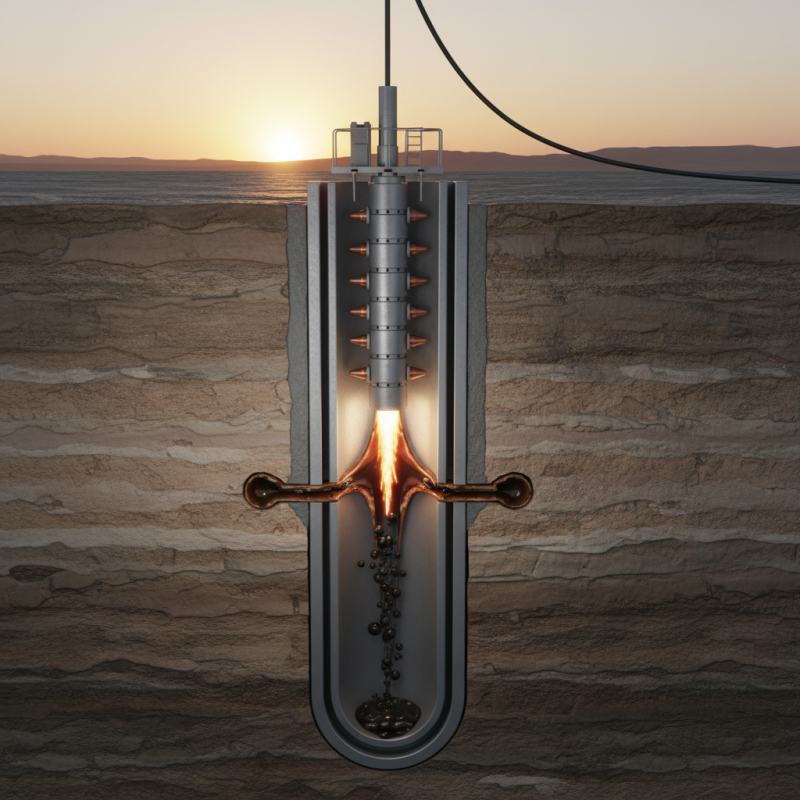
Perforation involves using specialized charges. These charges are placed in perforating guns, which are lowered into the well. Once activated, they create holes in the casing and surrounding rock. This allows gas to enter the well. The size and location of these perforations significantly affectproduction rates.
Tips: Always assess the well conditions before choosing a perforation strategy. A thorough analysis can lead to better results. Also, consider the formation type. Different formations may require specific perforating techniques and charges to maximize efficiency.
Monitoring production after perforation is important. It helps identify if adjustments are needed. Sometimes, the permeability may not meet expectations. This requires careful thought and possibly a change in approach. Keep in mind that every well is unique, and what works in one situation may not work in another.
Understanding Gas Well Perforation Charges: Types and Materials
Gas well perforation charges play a crucial role in extracting natural gas. These charges create openings in the casing of the well, allowing gas to flow. Different types of charges are available, each designed for specific geological conditions. Understanding their materials is key for effective perforation.
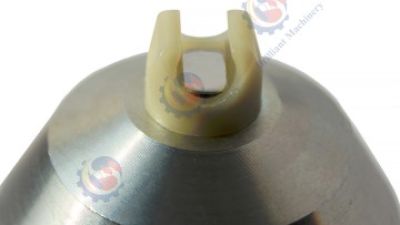
Common types include shaped charges and explosive charges. Shaped charges focus energy in a directed blast, creating a clean hole. Explosive charges, on the other hand, provide a more expansive blast. The choice depends on factors like the rock type and gas pressure. Proper selection can improve efficiency but requires careful consideration.
Materials used in these charges also vary. Some are made of metal components, while others incorporate advanced compounds. Each material affects the performance and safety of the charge. Testing different options is essential for optimization. Every formation presents unique challenges. It is important to learn from each perforation attempt.
How Perforation Charges Operate: The Science Behind the Process
Perforation charges play a critical role in accessing oil and gas reserves. These specialized devices are inserted into wells to create openings in the casing and surrounding rock. The process involves a sequence of carefully timed detonations. It’s not just about the explosion; it’s about precision and technology.
The science behind perforation charges is fascinating. Each charge is designed to penetrate at specific angles and depths. This is crucial for maximizing access to reservoirs. The method employs jet cutting technology, where high-pressure jets of liquid or gas carve paths through rock. However, the design process is not always flawless. Inconsistent results can lead to decreased production efficiency.
Challenges arise during installation. Misguided charges can lead to unwanted fractures in the formation. This can compromise well integrity. Moreover, environmental factors can also impact performance. Engineers must continuously adapt their designs. Continuous improvements are needed to meet the changing demands of gas well drilling. Understanding the operation of perforation charges is essential for optimizing extraction processes in the oil and gas industry.
2026 Best Gas Well Perforation Charges Explained How Do They Work? - How Perforation Charges Operate: The Science Behind the Process
| Charge Type | Diameter (inches) | Depth of Penetration (inches) | Typical Applications | Initiation Method |
| Hollow Charge | 3 | 6 | Conventional Gas Wells | Shock Tube |
| Fracturing Charge | 2 | 8 | Shale Gas Extraction | Electrical Detonation |
| Gun Perforating Charge | 2.5 | 5 | Deep Water Wells | Non-Electric |
| Plug and Perf Charge | 3.5 | 7 | Unconventional Gas Wells | Electric Wire Line |
| Micro Perforation Charge | 1 | 3 | Enhanced Oil Recovery | Shock Wave |
Key Industry Standards for Gas Well Perforation Effectiveness
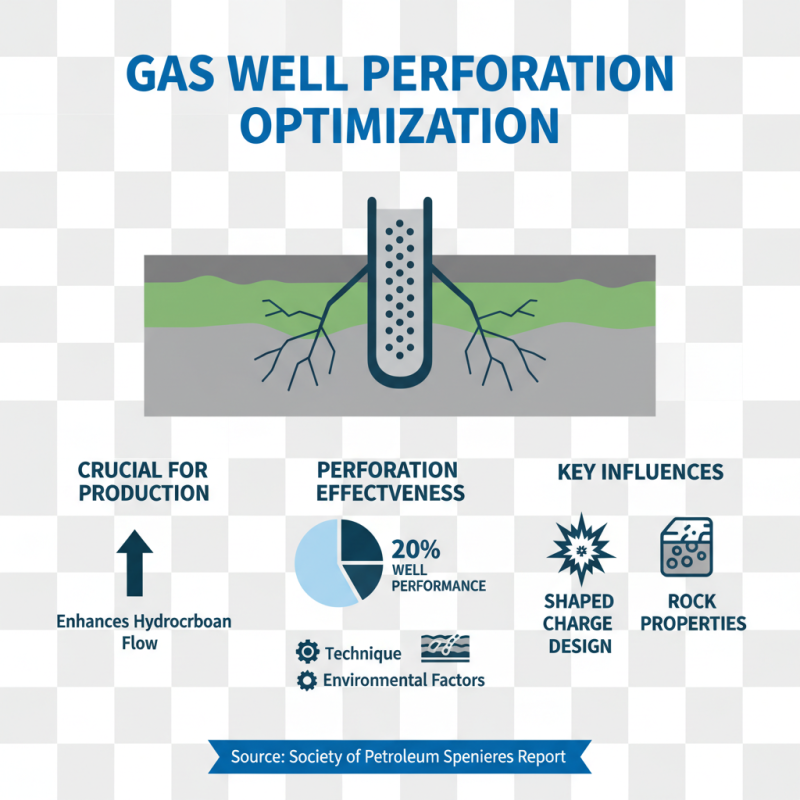
Gas well perforation is a crucial process in enhancing hydrocarbon production. Industry data highlights that perforation effectiveness can vary significantly based on techniques used and environmental factors. A report by the Society of Petroleum Engineers notes that up to 20% of well performance is directly attributable to perforation quality.
Key industry standards help ensure optimal results. The American Petroleum Institute outlines critical parameters, including hole size and spacing. Each perforation should align with geological formations to maximize resource retrieval. Research indicates that improper perforation patterns can lead to inefficient drainage, resulting in potential production losses of up to 30%.
Despite advancements, challenges persist. Many operators still grapple with outdated methods that underestimate formation complexity. A study revealed that only 75% of new wells meet best practice benchmarks. This gap suggests an urgent need for ongoing training and technology adoption. Improved education on perforation technologies can enhance overall effectiveness, bridging the performance gap in the industry.
Comparative Analysis of 2026 Gas Well Perforation Charges
In 2026, the gas well perforation market is evolving rapidly. A comparative analysis reveals various perforation charges, highlighting their efficiencies and costs. Industry reports indicate that the average cost per foot for perforation is projected to be around $500. This figure varies depending on the type of perforation used.
Explosives used in gas well perforation include shaped charges and non-electric systems. A critical insight from data is the decrease in the use of traditional explosives, which are being replaced by advanced technologies. For instance, industry statistics show that the use of advanced charges has increased efficiency by up to 30%. This leads to greater production rates and reduced costs in the long run.
Tip: Always evaluate the specific requirements of your project before selecting perforation charges. Different formations may necessitate unique solutions. Reflect on past perforation results. They can guide decisions about future practices. Prior knowledge is invaluable. Keep it at the forefront.
Impact of Perforation Techniques on Production Rates and Reservoir Yield
Perforation techniques play a crucial role in enhancing oil and gas production rates. Research indicates that the choice of perforation charges can significantly impact reservoir yield. Properly executed perforation can create effective flow paths, boosting hydrocarbon recovery. According to industry data, optimal perforation can increase production rates by up to 30% in certain wells.
The perforation process involves creating holes in the casing to allow fluids to flow into the wellbore. Variables such as charge size and spacing affect performance. A study from the Society of Petroleum Engineers revealed that improper charge selection could reduce production efficiency by as much as 15%. This emphasizes the importance of careful planning and execution in the perforation strategy.
Tips: Collaborate with engineers to choose the right perforation technique for your reservoir's specific characteristics. Monitor production data closely after perforation to assess performance. Regularly review and adjust strategies based on what the data reveals.
Safety Measures and Best Practices in Gas Well Perforation Operations
Gas well perforation is a critical process in the extraction of natural gas. Safety measures are paramount to ensure safe operations. Workers must wear protective gear to minimize risks. Regular training sessions help enhance their skills. Knowledge of emergency procedures is vital. In an industry where safety protocols can’t be ignored, lapses can lead to catastrophic outcomes.
Equipment must be regularly inspected and maintained. Perforation guns, for example, should undergo thorough checks before use. Improperly maintained tools can malfunction. Even minor issues can snowball into major incidents. Using clear, easy-to-understand communication throughout the team helps reduce errors. Everyone must be on the same page. This collaboration can often prevent accidents.
Despite these precautions, risks can still arise. Unforeseen geological conditions can affect plans. Teams must be adaptable, ready for challenges. Learning from past operations is crucial. Reflection on previous jobs often uncovers hidden dangers. Emphasizing vigilance can spell the difference between success and failure in this high-stakes field.
Innovative Solutions: Super Deep Penetrating Shaped Charges (SDP Charges) for Cost-Effective Casing Gun Applications
In the realm of petroleum and natural gas extraction, the efficiency of casing perforation has significant ramifications on operational costs and overall productivity. Innovative solutions such as Super Deep Penetrating Shaped Charges (SDP Charges) are engineered to optimize both penetration depth and consistency, thus enhancing the cost-effectiveness of perforating operations. Recent industry reports suggest that advancements in charge design can lead to energy outputs that are dramatically higher than traditional options, providing faster and more precise perforations. This not only maximizes the yield of existing wells but also minimizes the risk of casing damage, ensuring a sustainable operational environment.
The SDP Charges are particularly advantageous for economic casing gun applications, boasting a performance profile that does not compromise on quality. By leveraging the refined energy output and rapid penetration capabilities of SDP technology, operators can achieve the highest levels of perforation efficiency at significantly reduced costs. Industry analyses estimate that utilizing such innovative charge designs can lead to operational cost reductions of up to 20%, which is essential in today’s competitive energy market.
Furthermore, the versatility of SDP Charges makes them suitable for various applications, accommodating the needs of operators who prioritize both economic efficiency and high-performance standards. As the demand for more efficient energy extraction techniques continues to rise, the adoption of Super Deep Penetrating Shaped Charges is poised to transform conventional practices, setting a new benchmark for perforation quality and operational economy in the oil and gas sector.
FAQS
: Check the ingredients and ensure they suit your needs. Research any potential side effects carefully.
Look for user reviews and clinical studies. Results can vary between individuals.
Skin irritation and allergic reactions are possible. Monitor your body's response closely.
Follow the recommended usage guidelines. Overuse can lead to diminished results.
Not always. Effectiveness varies. Each type has pros and cons to consider.
Results can take time, sometimes weeks or months. Individual factors play a major role.
Check the return policy. Some companies allow returns, while others do not.
Mixing products can cause reactions. Test them separately before combining.
Keep them in a cool, dry place. Avoid direct sunlight to maintain effectiveness.
Stop using the product immediately. Consult a healthcare professional for advice.
Conclusion
The article "2026 Best Gas Well Perforation Charges Explained How Do They Work?" provides a comprehensive overview of gas well perforation, focusing on various aspects essential for understanding this critical process in the oil and gas industry. It begins with the basics of gas well perforation, explaining the different types of perforation charges and the materials used. The piece delves into the scientific principles behind how these charges operate, emphasizing their significance in enhancing production rates and optimizing reservoir yield.
Moreover, the article highlights key industry standards that govern the effectiveness of gas well perforation techniques, along with a comparative analysis of the latest perforation charges available in 2026. Safety measures and best practices in gas well perforation operations are also discussed, ensuring that industry professionals are equipped with the necessary knowledge to carry out these procedures safely and efficiently. Overall, the article serves as an informative guide for those looking to understand the intricacies of gas well perforation charges and their impact on production outcomes.